The Different Types of Windows and How They Differ
Choosing a type of window isn’t only about aesthetics. The way a window opens directly affects air tightness, ventilation, ease of cleaning, safety, and even how you can arrange the room. Here’s a clear guide to understanding the differences between the main types of windows found in homes in Québec.
Casement Window
A casement window is mounted on side hinges and opens outward, usually with a crank handle.
- It closes with even pressure on the weatherstripping, which often provides excellent air tightness.
- It can open very wide, which promotes strong ventilation.
Ideal for
Bedrooms, living rooms, offices, and areas where you want both performance and ventilation.
Good to know
Because it opens outward, it’s best to avoid areas where the opening could be in the way (near a patio, a narrow walkway, or a sidewalk).
Awning Window
An awning window is hinged at the top and opens outward from the bottom.
- Very practical for ventilation, even during light rain, because the sash forms a small “awning.”
- Often very airtight thanks to compression sealing, similar to a casement window.
Bathrooms, kitchens, basements, or combined with a large fixed window to create a wide glass area.
Good to knowThe opening is usually smaller than a casement window, creating a gentler, more controlled airflow.
Sliding Window
A sliding window glides smoothly thanks to tandem nylon rollers, and its sashes tilt inward to simplify maintenance.
- No clearance needed inside or outside, making it very practical when space is limited.
- Simple and quick to operate.
Basements, rooms near a balcony/patio, and places where an outward-opening window would be inconvenient.
Good to knowBecause this model slides along tracks with brushes and seals, air tightness can be lower than a comparable-quality casement or awning window. Build quality and installation make a significant difference.
Single-Hung / Double-Hung Window
A hung window opens vertically (one sash moves up; in some models, both sashes move).
- Popular for its classic style.
- Good, controlled ventilation: you can open from the bottom, and on some models, also from the top.
Traditional-style homes, heritage-style façades, and rooms where you want a vertical window without outward clearance.
Good to knowAs with sliding windows, there are moving parts and seals, so air tightness depends greatly on the quality level and the condition of the mechanisms.
Fixed Window
A fixed window is a window that does not open.
- Maximum natural light, maximum view, and often excellent energy performance since there is no opening mechanism.
- Fewer moving parts, so it is often very durable.
Living rooms, staircases, view-facing façades, and large window groupings.
Good to knowIt does not provide ventilation. It’s usually paired with operable windows nearby (awning or casement) to maintain good airflow.
Architectural Window
This isn’t an opening mechanism in itself. It’s a category of windows designed for special shapes or configurations: rounded, triangular, trapezoidal, large compositions, signature façade windows, etc.
- Creates a “wow” effect and increases natural light.
- Often helps match a specific architectural style or highlight a façade.
Front façades, living rooms with cathedral ceilings, stairwells, and custom projects.
Good to know
Often fixed, or combined with operable sections. The main goal is aesthetics and showcasing the design, with an adapted build.
How to Choose Easily by Room
- Bedroom: casement (good ventilation, comfort, easy to use).
- Bathroom: awning (controlled ventilation, practical).
- Kitchen: awning or casement (depending on placement; avoid a casement that could hit a balcony).
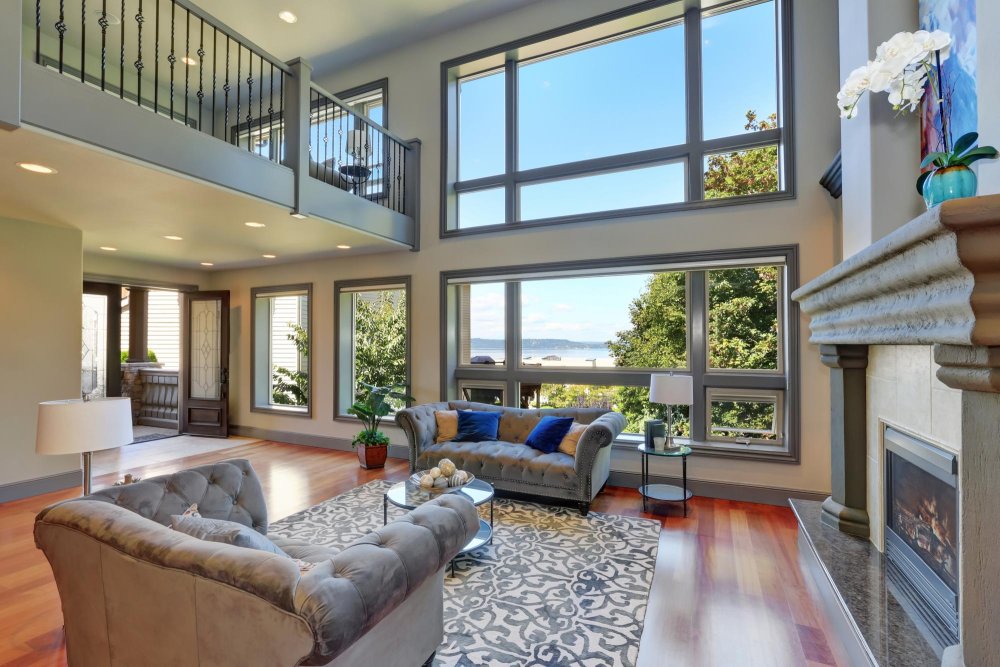
- Living room/open concept: fixed + operable windows (lots of light + ventilation).
- Basement: sliding or awning (depending on layout and clearance).
- Staircase: fixed or architectural (light and design impact).
In short, the right window choice depends mainly on balancing ventilation, air tightness, available space, and architectural style. A casement window focuses on performance and versatility, the awning window makes everyday ventilation easier, while sliding or hung models stand out for practicality. Fixed and architectural windows maximize natural light and visual impact. By identifying your priorities room by room, you’ll easily find the configuration that offers the best comfort and durability for your home. Find a Fenêtres Concept partner near you to discuss your project!