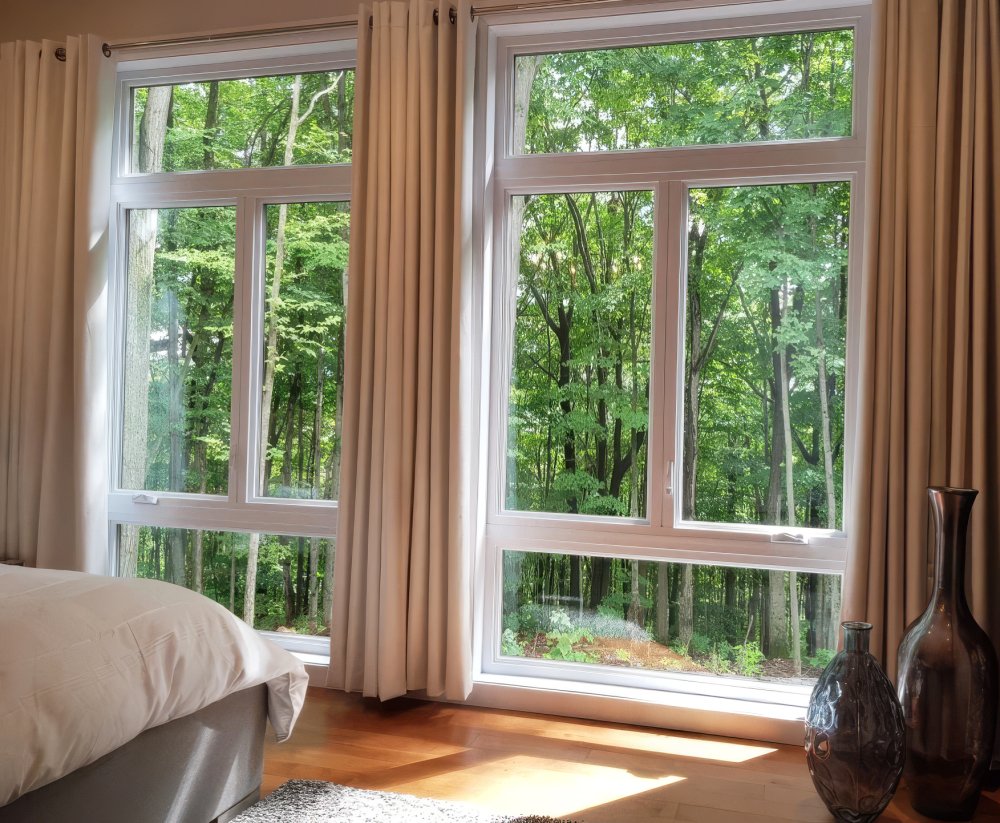
Fixed or Operable Windows: How to Create the Right Combination
Fixed or operable windows? For a large opening, the best answer is often both.
A fixed section helps maximize natural light and provide an unobstructed view, while an operable section provides ventilation where it is needed.
The right combination depends on the room, its layout and how the window will be used day to day.
Each Section Can Serve a Different Purpose
Within a single opening, different sections can meet different needs.
A fixed section can let in more natural light and make the most of the view. An operable section lets you air out the room when outdoor conditions are favourable.
Before choosing a configuration, it helps to ask yourself a few questions:
- How often will you want to open the window?
- Is the view a priority?
- Where will the handle be easiest to reach?
- Does the room need a lot of ventilation?
- Could furniture or a countertop make the window difficult to access?
These answers can often help you determine how much of the window actually needs to open.
A Fixed Section to Maximize Light and Views
Because it has no operable sash, a fixed window generally offers a less obstructed view.
In a large window configuration, it can become the main feature. Positioned in the center, it draws the eye outdoors and creates a greater sense of openness.
It is particularly well suited to a living room, dining room or any other space where you want to highlight a view of the yard, a wooded area or the surrounding landscape.
An operable section can then be added to one side to provide ventilation, without adding opening mechanisms throughout the entire window.
An Operable Section Where It Will Be Most Useful
The operable section should be positioned somewhere practical and accessible.
In many rooms, a single casement or awning window is enough to let in fresh air. In a wider opening, two operable sections can also frame a large fixed section.
The goal is not to make every section open, but to provide enough ventilation for the way the room is used.
For example, a kitchen may need a window that is easy to open despite a countertop being in the way. In a living room, you might prioritize an unobstructed central view, with a less prominent operable section to one side.
Think About the Layout, Not Just Symmetry
A perfectly symmetrical configuration can look beautiful, but it is not always the most practical choice.
A sofa, bed, table or countertop can make a handle difficult to reach. That is why it is important to consider the interior layout before deciding where to position the operable sections.
Depending on your needs, several combinations are possible:
- A large fixed section paired with one operable section.
- A fixed section with an operable section on each side.
- A fixed window combined with an awning section.
- Several fixed sections when the room already has other sources of ventilation.
The best configuration is not necessarily one where every section is identical. It is the one that fits naturally into the room.
The Configuration Should Also Complement the Home’s Exterior
A window needs to work well inside the home while also complementing its exterior.
The arrangement of the sections and the lines created by the frames influence the appearance of the facade. A simpler configuration can sometimes highlight the architecture more effectively than one with too many divisions.
It is therefore important to consider the other windows, the front door, the proportions of the house and its existing architectural lines.
The goal is not necessarily to choose the same configuration everywhere, but to create a cohesive overall look.
Every Room Deserves Its Own Consideration
Even when several openings have similar dimensions, they do not necessarily serve the same needs.
In the living room, the view may be the priority. In the kitchen, ease of opening and accessibility may matter more. In a family room, you may be looking for a balance between light, ventilation and functionality.
Using the same configuration for every window may seem simpler, but it is not always the best way to adapt your home to everyday life.
A Large Window Should Be Planned as a Whole
Designing a large window configuration is about more than deciding how many sections it will contain.
It means determining where light should enter, where the view should remain unobstructed and where an operable section will actually be used.
A fixed section can highlight the landscape and maximize natural light. An operable section can provide ventilation where it is needed. Together, they create a more practical window that is better suited to the room.
Before adding more operable sections, ask yourself one simple question: which ones will actually be used?
Planning a window replacement project? Find a Fenêtres Concept partner near you to discuss the different configurations available for your home.